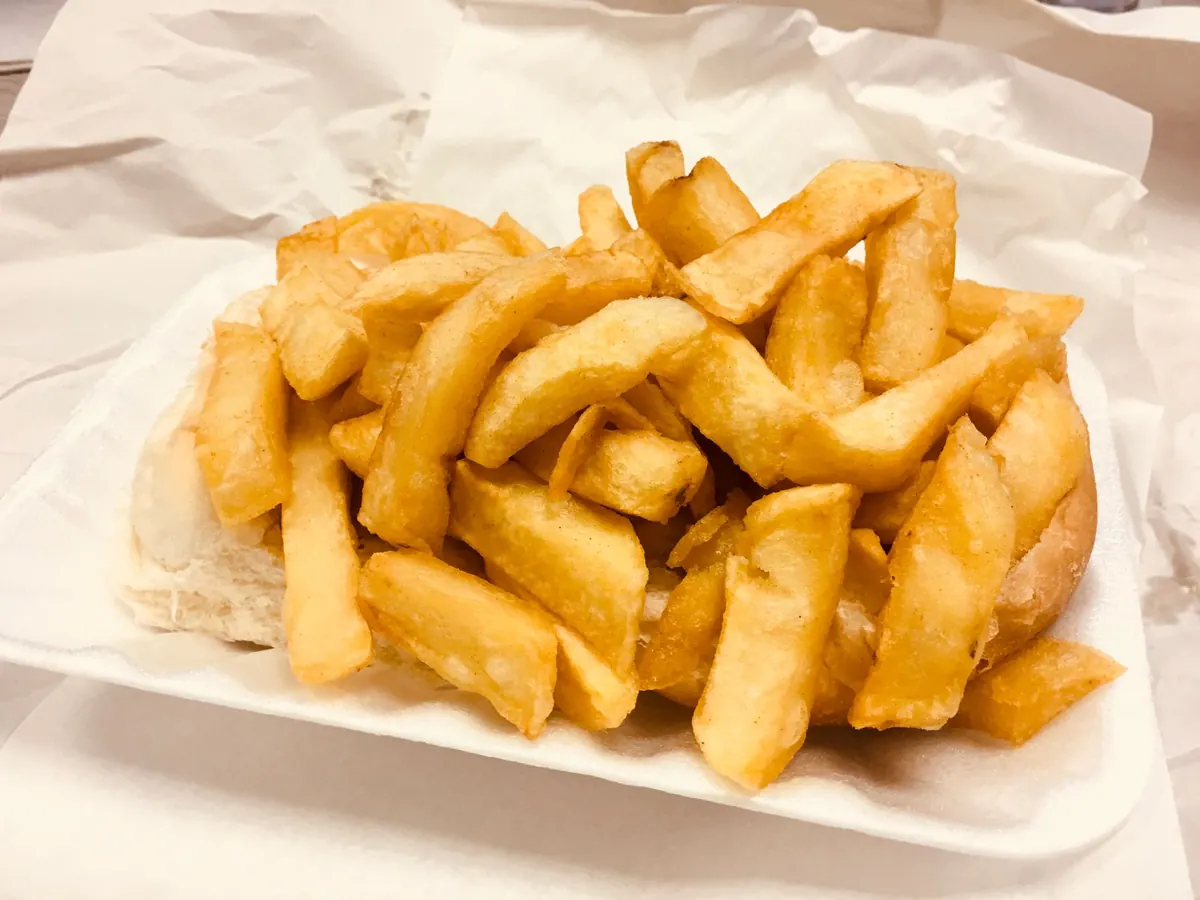
Cold fish and chips is a sad thing. Badly reheated fish and chips is worse: batter that bends instead of snapping, chips with the texture of damp cardboard, and a kitchen that smells like last night's fryer. The good news is that fish and chips reheat well when you use dry, high heat and treat the fish and the chips as two separate jobs. Here's how the three main methods compare, what each one is actually good at, and when to stop trying to save the last few chips.
Why the Microwave Turns Batter to Leather
We've all done it. Two minutes on high and everything is hot again. It's also ruined.
A microwave works by exciting water molecules, and batter is full of trapped water. That water turns to steam inside the crust, and the crust can't breathe. The steam softens the batter from within, so what was crisp becomes chewy and tough rather than merely soft — and tough is much harder to rescue.
The fish suffers in the opposite direction. A fillet that was already cooked gets cooked a second time, and the flakes tighten and dry out. Chips go waxy, because the starch that crisped up in hot oil firms up again as they cool in the fridge, and a microwave warms them back up without ever breaking that firmness down. A microwave is a brilliant machine. Leftover fish and chips is not its job.
Think of reheating as drying, not warming. Anything that traps steam is working against you.
The Oven Method: Best for a Whole Portion
If you have two fillets and a full bag of chips to bring back, the oven is the most reliable option. It's slower than the other methods but it handles volume, and it gives you the crispiest chips of the three.
- Preheat properly. 200°C / 400°F, or 180°C / 355°F in a fan oven. A cold oven steams the food while it climbs.
- Use a wire rack over a baking tray. Air needs to move underneath. A flat tray traps moisture against the bottom of the chips and they go soggy from below.
- Chips first, fish later. Chips need 8–10 minutes; a thick fillet needs 10–12. Give the chips a head start and a shake halfway.
- Skip the foil. Wrapping anything in foil is a steam trap with extra steps.
If the batter is already floppy, a light spray of oil over the fish helps it crisp rather than simply dry. Don't soak it. The trade-off with the oven is that the fish can lose a little moisture, so keep an eye on it in the final few minutes.
The Air Fryer: Fastest Route Back to Crisp
An air fryer is essentially a small convection oven with a fan that doesn't hold back. That makes it the quickest way to get crunch back, as long as you don't overcrowd it.
Set it to 190°C / 375°F. Chips take 6–8 minutes with a shake of the basket at the halfway point. Fish takes 8–10 minutes, depending on thickness. Cook them in batches unless your basket is genuinely big enough for a single, well-spaced layer — stacking is the one mistake that undoes everything.
A note on batter in an air fryer
The fan blasts very hot air from close range, so the edges of a battered fillet can catch before the middle is hot. Check the fish at six minutes. If the batter looks like it's darkening too fast, drop the temperature by 10°C and give it a couple more minutes. Add the fish for the last stretch only, so it isn't sitting under the fan drying out while the chips finish.
The Frying Pan: For One Fillet and a Handful of Chips
This is the method that gets closest to the original, and it's the one to use when you're reheating a single portion.
- Heat a thin film of oil in a frying pan over medium-high heat.
- Lay the chips in a single layer and leave them alone for two full minutes before you touch them. That untouched contact is what builds a crust.
- Turn them, then push the chips to one side and add the fish to the empty space, skin side or batter side down.
- Cook the fish two to three minutes per side over medium heat, pressing it lightly with a spatula so the whole surface makes contact.
- Drain both briefly on kitchen paper and serve straight away.
Use a splatter guard if you have one. The oil will spit, and batter that has been in the fridge releases moisture fast.
Fish and Chips Are Two Separate Jobs
Most disappointing reheats come down to one thing: the fish and the chips were heated together, and the fish lost. A fillet holds a lot of moisture, and it releases that moisture as it warms. Put it on top of the chips and you've built a small steam room.
So: heat them separately where you can, or at least give the chips a head start and add the fish at the end. Keep sauces on the side rather than poured over. Add vinegar after reheating, not before — acid plus heat plus a closed environment is a shortcut to soggy batter. Salt at the end, too, so it stays on the surface where you want it. And warm the plates. It sounds fussy; it's the difference between food that's hot and food that's tepid within four minutes.
Storage, Safety and Knowing When to Stop
Reheating only works if the leftovers were stored properly. Get the fish and chips into the fridge within a couple of hours of cooking, in a container lined with kitchen paper to absorb condensation. Eat them within a day or two, and reheat once — not twice.
Heat until piping hot all the way through, and if the fish smells strongly fishy or the batter has turned slimy, throw it out. That's not a crunch problem, it's a food safety problem, and no reheating method fixes it. If you're ever unsure whether leftovers are safe, follow your local food safety guidance rather than your nose alone.
There's also a point where it isn't worth it. Chips that were thin and crispy to begin with reheat far better than thick, floury ones. If your chips were already soft when they arrived home, the best you'll manage is warm and soft, and you should plan for that rather than fight it.
The Short Version
- Never microwave. It steams the batter from the inside and dries the fish.
- Full portion: oven at 200°C / 400°F, wire rack, chips 10 minutes, fish 10–12.
- Speed: air fryer at 190°C / 375°F, chips 6–8 minutes, fish 8–10, single layer only.
- One portion: frying pan, medium-high, chips first, fish last, two to three minutes a side.
- Always: separate the fish from the chips, sauce and vinegar on the side, salt at the end.
Do that and Friday night's dinner can survive until Saturday lunch with its crunch mostly intact. That's a small win, but it's a real one.
Photo: glen kerry / Pexels