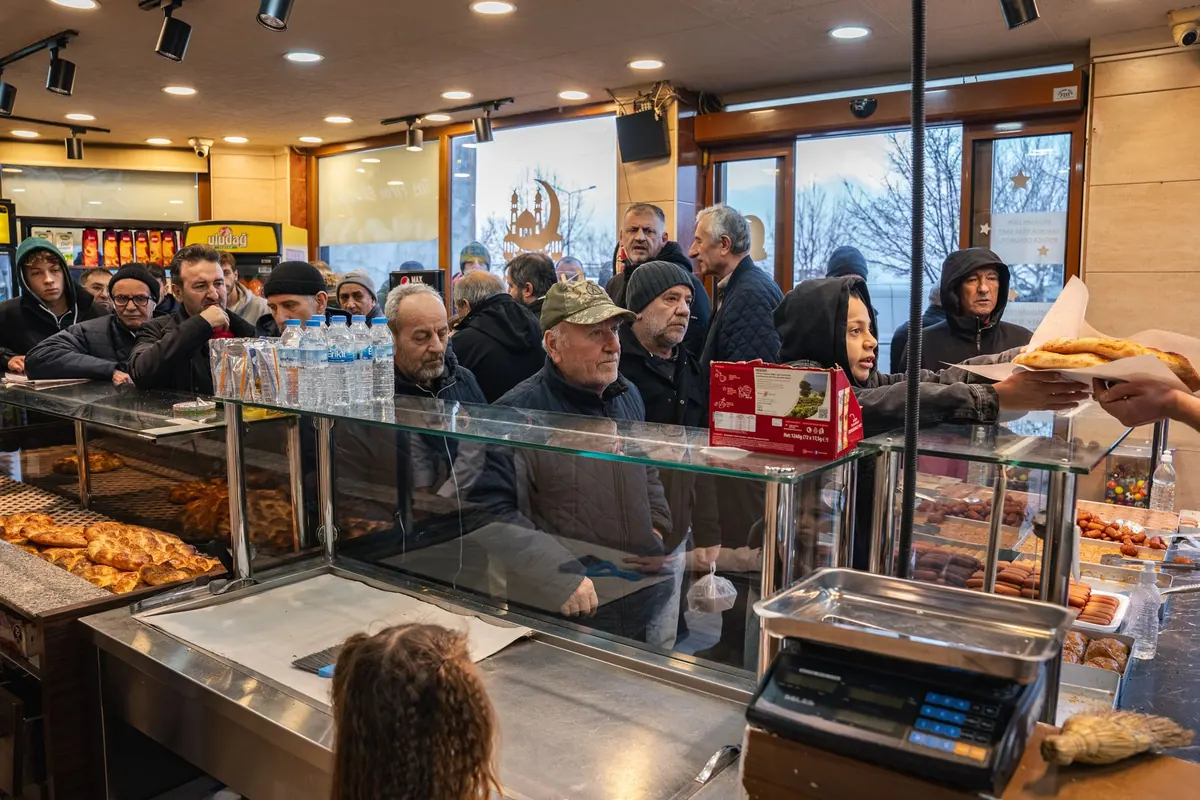
Your first visit to a British chip shop can feel like walking into a conversation already in progress. The queue knows what it is doing. The person at the fryer is moving fast. Somewhere ahead of you, somebody says "one and one, please" and everyone nods except you. It is not complicated, though. A chip shop runs on a few unwritten rules, a small vocabulary and the willingness to say what you want clearly. Learn those and you will order like a regular.
Read the Queue Before You Join It
Find the end of the line first. Most shops have a queue that starts at the door and spills onto the pavement; some keep a row of chairs inside for waiting. A few, particularly in Scotland and the north of England, work on a looser system where people cluster near the counter and take turns roughly in the order they arrived.
If it is unclear, ask. "Am I after you?" is a perfectly normal question and nobody will mind. What people do mind is hovering by the fryer, leaning on the counter, or reaching the front and only then starting a long phone call to find out what your family wants. Decide before you get there. If you are ordering for four people, write it down or keep it in your head. One person orders, one person pays.
The Jargon, Translated
Chip shop language is short and efficient. Here is what you will hear.
- One and one — one fish and one portion of chips. "Two and one" means two fish and one lot of chips.
- Single — a portion of chips on its own, no fish.
- Fish supper — Scottish for fish and chips, usually with a choice of cod or haddock.
- Scraps — the crisp stray bits of batter left in the fryer. Often free if you ask, and worth asking for. In some regions they are called "bits".
- Open or wrapped — "open" means handed over unwrapped or in a tray so you can eat it straight away. "Wrapped" means paper and a bag to carry home.
- Salt and vinegar? — the standard question at the till. Answer yes, no, or "just salt".
- Chip butty, barm, cob or roll — chips tucked into bread. The name changes with the county.
- Salt 'n' sauce — Edinburgh and the Lothians: salt with a thin brown sauce, not vinegar.
- Haddock or cod? — some shops ask you to choose. Haddock is the favourite in Scotland and the north-east; cod is the common default elsewhere.
Portion Sizes: What to Actually Order
Chip portions are generous, and fish are often enormous. A regular bag of chips is plenty for one hungry person; a large can comfortably feed two or three. A single piece of cod or haddock is a full meal on its own.
As a rough plan: one fish each if you are properly hungry, or one fish between two with two portions of chips. Many shops sell children's portions, and most will sell you a smaller fish if you ask. If you are unsure, say so. "How big is a regular?" is a question staff answer all day long.
Worth remembering that this is deep-fried food, usually salted. If you are watching fat or salt for medical reasons, ask for no salt or share a portion, and take advice from a healthcare professional about what suits you.
The Extras That Change Everything
Beyond fish and chips, most shops keep a short list of sides: mushy peas, curry sauce, gravy, a pickled onion or a pickled egg. You will also see battered sausages, fish cakes, pies and, in Scotland, haggis or black pudding in batter.
Ask for sauces in a separate pot if you are travelling. Gravy and curry sauce turn chips to mush within minutes, which is fine if you are eating on a bench outside and a disaster if you are ten minutes from home.
Salt, Vinegar and the Wrapping
Salt and vinegar go on at the counter, so decide before you are asked. Vinegar soaks in fast. If you are eating in the car or walking home, ask them to go light on it, or leave the paper open so the steam escapes.
A sealed parcel steams and the batter goes soft. Keep the outer bag open on the way home, and eat within ten minutes or so for the best texture. If the shop is quiet and you want a fish cooked fresh rather than one from under the lights, ask politely whether they would drop one for you. During a Friday evening rush, that request will not go down well.
Paying, and Getting Out of the Way
Most shops take payment when you order, or when the food is handed over. Cash is still common, and a fair number of shops are card-only or cash-only depending on the area, so it is worth asking "card okay?" as you order. Some set a minimum spend for cards.
Tipping is not expected. A "cheers" and a smile are the usual courtesy. If you are given a ticket or a number, keep hold of it. Once you have paid, step away from the counter to sort out change, bags and children, and check your order before you leave the shop.
Your First Order, Start to Finish
- Find the end of the queue and wait your turn.
- Decide your order before you reach the counter.
- Say it simply: "One and one, please. Salt and vinegar. Open, thanks."
- Add extras only if you want them — scraps, mushy peas, a pickled onion.
- Pay, take your ticket, and stand clear of the counter.
- Check the bag, keep the paper open on the way home, and eat soon.
Do that once and the second visit is easy. You will know what you want, you will know what to say, and the person at the fryer will know exactly what you mean.
Photo: Yasin Onuş / Pexels